
Search Ashe County Family Court Records
Ashe County family court records are filed and stored at the Clerk of Superior Court in Jefferson. Located in the northwest mountains of North Carolina, Ashe County has a population of roughly 27,000. The clerk office processes all family law matters for Ashe County, covering divorce, custody, child support, alimony, and domestic violence orders. You can search records online through the eCourts portal or visit the courthouse on Government Circle. Staff at the clerk office help people find case files, check hearing dates, and order copies.
Ashe County Quick Facts
Ashe County Clerk of Court
The Clerk of Superior Court in Ashe County maintains every family court record filed in the county. The office is at 150 Government Circle in Jefferson. This is the central location for filing new cases, viewing existing files, and getting copies of court orders.
Ashe County shares Judicial District 24 with Alleghany County and Wilkes County. District Court judges rotate through the three counties to hear family cases. Local rules for District 24 add to the statewide rules and apply to all cases filed in Ashe County. The clerk accepts filings during regular hours. Fees must be paid when you file. The office takes cash, checks, and money orders.
Public terminals in the clerk office let you search the eCourts database at no charge. The Ashe County courthouse is accessible for people with disabilities and has security screening at the entrance.
| Court |
Ashe County Clerk of Superior Court 150 Government Circle Jefferson, NC 28640 Phone: (336) 846-5501 |
|---|---|
| Hours | Monday through Friday, 8:30 AM to 5:00 PM |
| Website | nccourts.gov/locations/ashe-county |
Note: The clerk office in Ashe County is closed on weekends and state holidays.
Finding Ashe County Family Court Records
There are two paths to find family court records in Ashe County. The online route uses the state eCourts portal. The in-person route takes you to the courthouse in Jefferson.
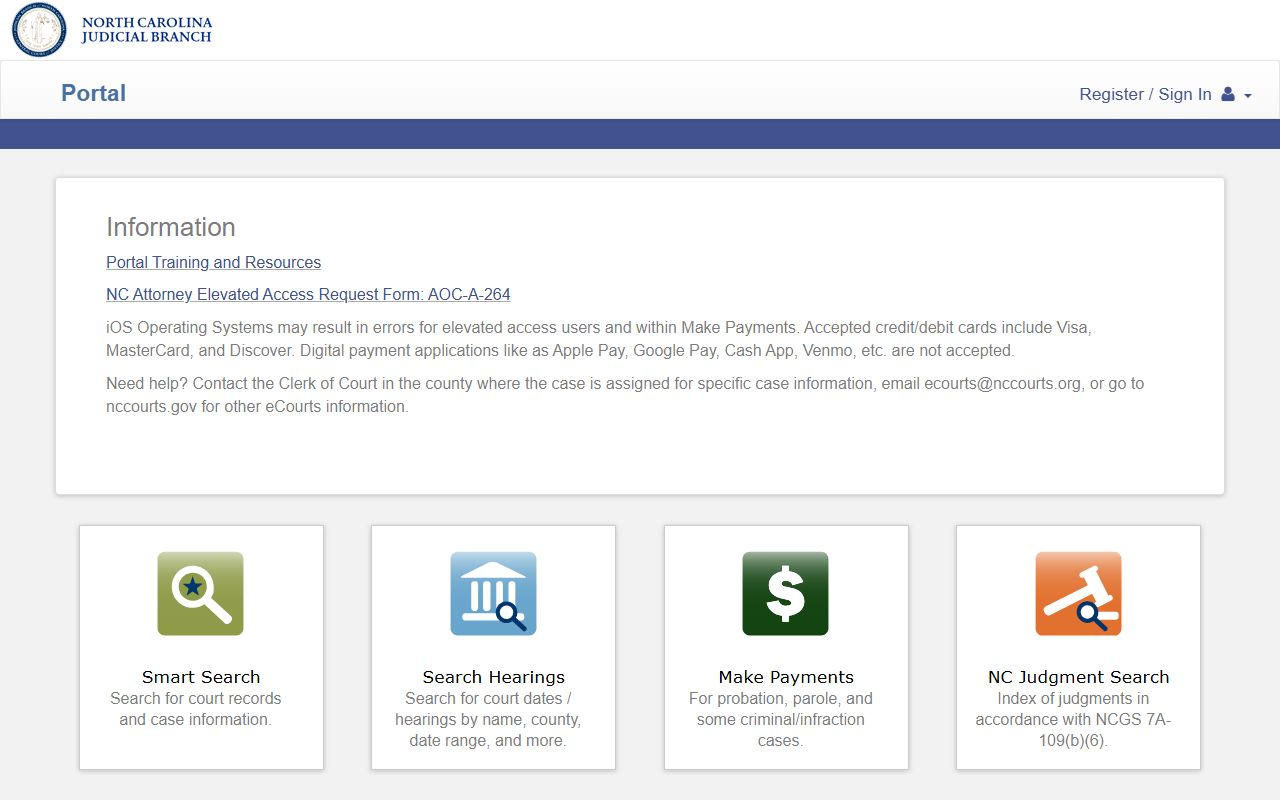
The eCourts system is free and available around the clock. You can search Ashe County cases by party name, case number, or case type. The portal shows case status, hearing schedules, docket entries, and filing information. Family law case types include ABS for divorce, CUST for custody, CS for child support, ALIM for alimony, ED for equitable distribution, and 50B for domestic violence protective orders. The data comes from the clerk office system and is updated in real time.
For an in-person visit, bring a photo ID to the clerk office at 150 Government Circle. Staff can search by name or case number. Plain copies cost $0.25 per page. Certified copies cost $5.00 per document plus the page fee. Most Ashe County requests are filled in three to five business days. Older records in off-site storage may take longer.
The image below shows the Ashe County eCourts portal used for searching family court records.
The portal works on all devices. You can print or save case details from the screen.
Ashe County Divorce Filings
Divorce is a common type of family court record in Ashe County. Under N.C.G.S. 50-6, spouses must live apart for one full year before filing for absolute divorce. One spouse must have been a resident of the state for at least six months under N.C.G.S. 50-8. If you live in Ashe County, you file at the courthouse in Jefferson.
You pay $225 to file. The clerk gives you a case number. You then serve the other spouse through the Ashe County Sheriff, a private process server, or certified mail. Proof of service is added to the court file. After the one-year separation and all other conditions are met, the judge enters the final divorce judgment. That judgment is part of the public record in Ashe County.
Equitable distribution claims under N.C.G.S. 50-20 and alimony claims must be raised before the divorce judgment is signed. Missing that deadline means those claims are waived for good.
Protective Orders and Support in Ashe County
Domestic violence protective orders are filed at the Ashe County clerk office under Chapter 50B. No fee is charged. During business hours, file at the courthouse. After hours, contact law enforcement for help reaching a magistrate.
Temporary orders last up to 10 days. After a full hearing, orders can last up to one year and be renewed for two more years. The Ashe County Sheriff serves orders at no cost. These orders may include temporary custody, home possession, and support. All records go in the Ashe County family court file.
For child support, the NC Child Support Services has a local office for Ashe County. Parents can apply for help with new orders, enforcement, and payment collection. The $25 application fee is waived for those on public assistance. Support orders are filed with the Ashe County clerk and become part of the court record.
Note: Child support payments in Ashe County go through the state centralized collections system.
Legal Resources in Ashe County
Legal Aid of North Carolina offers free legal help to low-income people in Ashe County. They handle divorce, custody, support, and protective order cases. Call (866) 219-5262 to check if you qualify.
The NC Judicial Branch website has all court forms for family law matters. The Ashe County clerk provides self-help materials for people who file on their own. District 24 requires mediation for contested custody cases. Parent education may also be required. Ashe County family court records are public under N.C.G.S. Chapter 132, with limits on sealed and juvenile files.
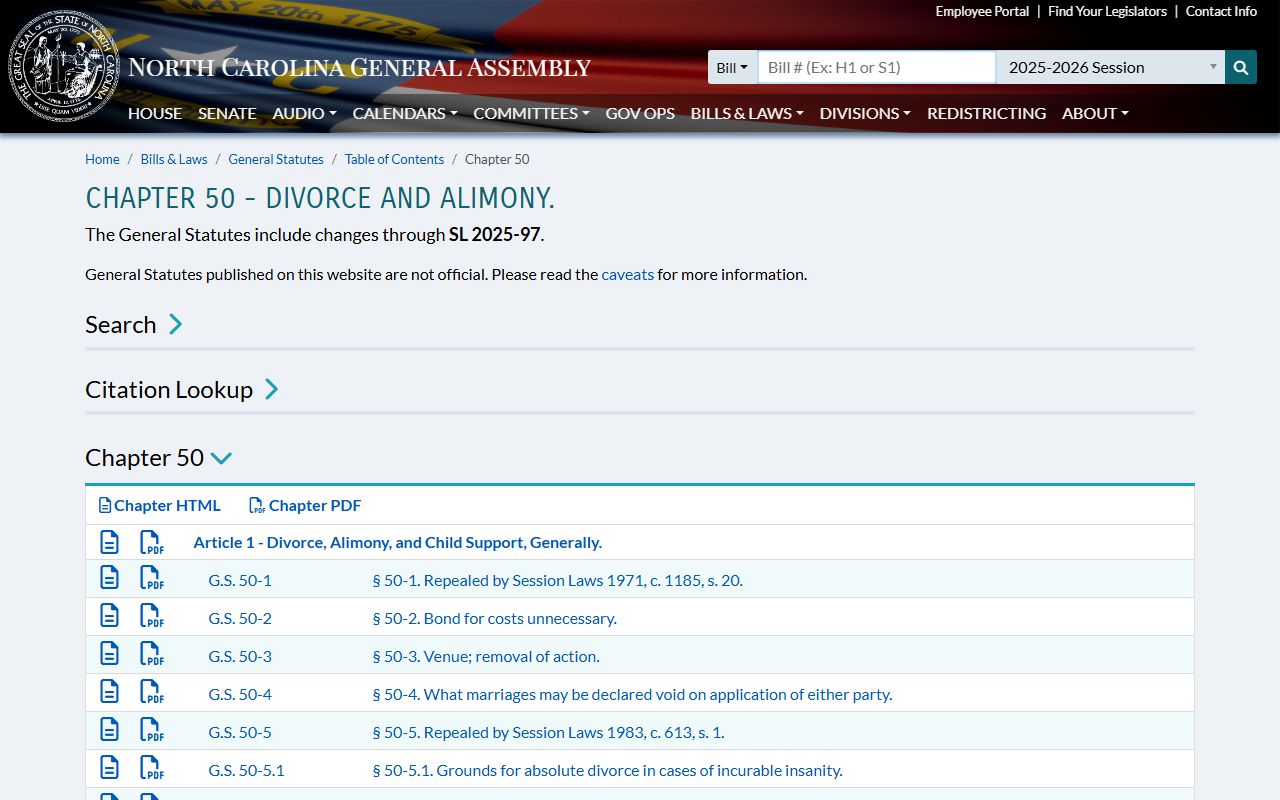
The image below shows the North Carolina divorce information page from the state court system.
The court in District 24 may appoint a Guardian ad Litem for children in high-conflict custody matters filed in Ashe County.
Nearby Counties
These counties border Ashe County. Confirm which county you live in before filing a family court case. You must file where you have jurisdiction.