
Mecklenburg County Family Court Records
Mecklenburg County family court records are maintained by the Clerk of Superior Court in Charlotte. Mecklenburg is the most populous county in North Carolina with over 1.1 million residents. The clerk office handles a high volume of family court cases each year. These cover divorce, child custody, child support, alimony, equitable distribution, and domestic violence. You can search for family court records in Mecklenburg County online or at the courthouse in Charlotte. Records are public under state law.
Mecklenburg County Quick Facts
Mecklenburg County Clerk of Superior Court
The Clerk of Superior Court processes all family court records in Mecklenburg County. This is one of the busiest clerk offices in the state. Thousands of family law cases are filed each year. The staff handles everything from new filings to certified copies of court orders.
Mecklenburg County is part of Judicial District 26. The district court in Charlotte hears family law matters including divorce, child custody, child support, alimony, and domestic violence cases. The courthouse is at 832 E. 4th St in uptown Charlotte. Because of the high volume, wait times can be longer than in smaller counties. Plan ahead when you visit. The clerk office recommends arriving early for the best service. When you file a new case, you receive a case number. Use this number for all future record searches in Mecklenburg County.
Charlotte is the largest city in North Carolina. All family court cases for Mecklenburg County residents are handled at this one courthouse location.
| Court |
Mecklenburg County Clerk of Superior Court 832 E. 4th St Charlotte, NC 28202 Phone: (704) 686-0400 |
|---|---|
| Hours | Monday through Friday, 8:00 AM to 5:00 PM |
| Website | nccourts.gov/locations/mecklenburg-county |
Searching Family Court Records Online
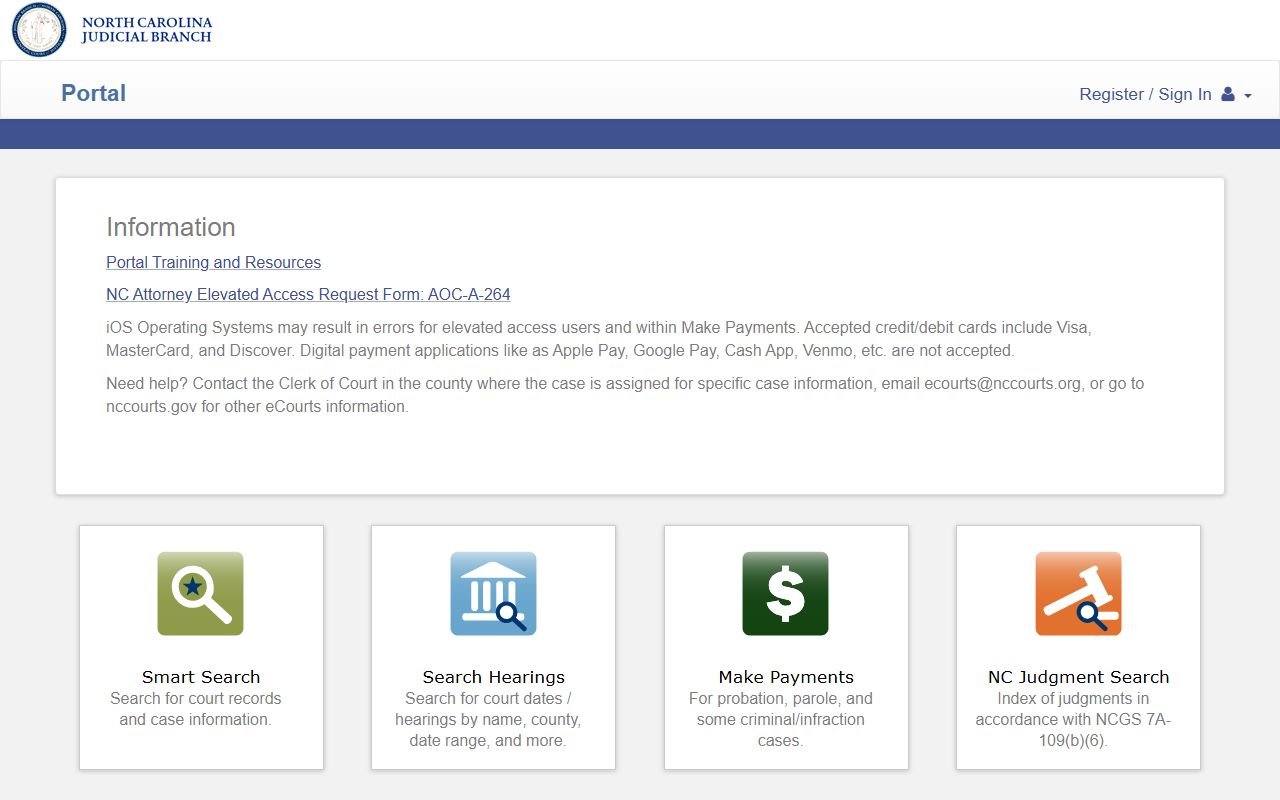
The NC eCourts portal is the primary online tool for searching Mecklenburg County family court records. Enter a party name or case number to find results. The portal shows case type, filing dates, status, and upcoming hearings. Basic access is free.
The portal does not show full court documents. For complete files, go to the Mecklenburg County clerk office at 832 E. 4th St in Charlotte. Staff can pull records and make copies. Certified copies are available at a higher cost. The eCourts system is being expanded across North Carolina. Mecklenburg County is a priority county for the rollout because of its size and case volume. More records are becoming available online each year.
You can also search in person. Bring your ID. A case number speeds up the process.
Note: Due to high volume, allow extra time when requesting records at the Mecklenburg County clerk office.
Divorce Cases in Mecklenburg County
Mecklenburg County sees a large number of divorce filings each year. North Carolina requires one year of living apart before filing under N.C.G.S. 50-6. At least one spouse must have lived in the state for six months under N.C.G.S. 50-8. If you live in Mecklenburg County, you file at the Charlotte courthouse.
A divorce record in Mecklenburg County includes the complaint, any response, separation agreements, and the final judgment. The judgment dissolves the marriage and becomes a permanent record. You can get certified copies from the clerk office. These are often needed for name changes, remarriage, or property transfers. Divorce records are public under the North Carolina Public Records Act. Anyone can request to view them at the Mecklenburg County courthouse.
Child Custody Records in Mecklenburg County
Child custody cases fill a large part of the family court docket in Mecklenburg County. Either parent can file for custody. Marriage is not required. The court decides based on the best interest of the child.
A custody order from Mecklenburg County sets out legal custody, physical custody, and visitation schedules. Child support is part of many custody cases. Support amounts follow state income guidelines. Both parents' earnings factor in. The NC Child Support Services program helps enforce payment orders across the state. If a parent falls behind, the other can file a motion for contempt in Mecklenburg County.
Support and custody orders can be modified when circumstances change. File a motion at the Mecklenburg County courthouse to request a change. All filings become part of the family court record.
Domestic Violence and Alimony
Domestic violence protective orders are filed under Chapter 50B in Mecklenburg County. Because Charlotte is a large city, the court handles many of these cases. A person in danger can ask for an emergency order. It can be granted the same day. A full hearing follows within ten days. If the judge issues the order, it becomes part of the family court record in Mecklenburg County.
Alimony claims are filed during divorce cases. One spouse asks the court for ongoing support. The judge weighs income, marriage length, and each spouse's needs. Property division claims under N.C.G.S. 50-20 are handled through equitable distribution. Both alimony and property claims must be filed before the divorce judgment is entered. Missing this deadline waives those claims in Mecklenburg County. All orders are kept in the case file at the clerk office.
Note: Claims for alimony and equitable distribution cannot be filed after the divorce judgment is entered in Mecklenburg County.
Legal Resources in Mecklenburg County
Legal Aid of North Carolina has an office in Charlotte that serves Mecklenburg County residents. They provide free legal help with divorce, custody, and protective order cases to those who qualify based on income. Call their helpline to check eligibility.
The NC Judicial Branch website has court forms and guides for family law cases. These work in Mecklenburg County. The obtaining court records page explains how to get copies of family court records from any county. The Mecklenburg County courthouse also has a self-help center that assists people who are handling their own family court cases.
The NC Courts services page offers more tools for self-represented litigants in Mecklenburg County. The North Carolina State Bar referral line at 1-800-662-7660 can connect you with a family law attorney in the Charlotte area.
Nearby Counties
These counties border Mecklenburg County. Make sure you file your family court case in the county where you live. The court needs jurisdiction over your case.